Single Platform For The Whole Set Of Books

Accounting · Purchases

Every Rupee Out, Against A Ledger

The purchase side decides two things beyond the expense: the credit you can claim and the tax you must deduct. Both are settled at the bill, not at quarter-end.

✓ITC Reconciles To 2B
✓TDS Section At The Bill
✓Payables Ageing That Ties
See It On Your Books › Watch The 90-Second Tour
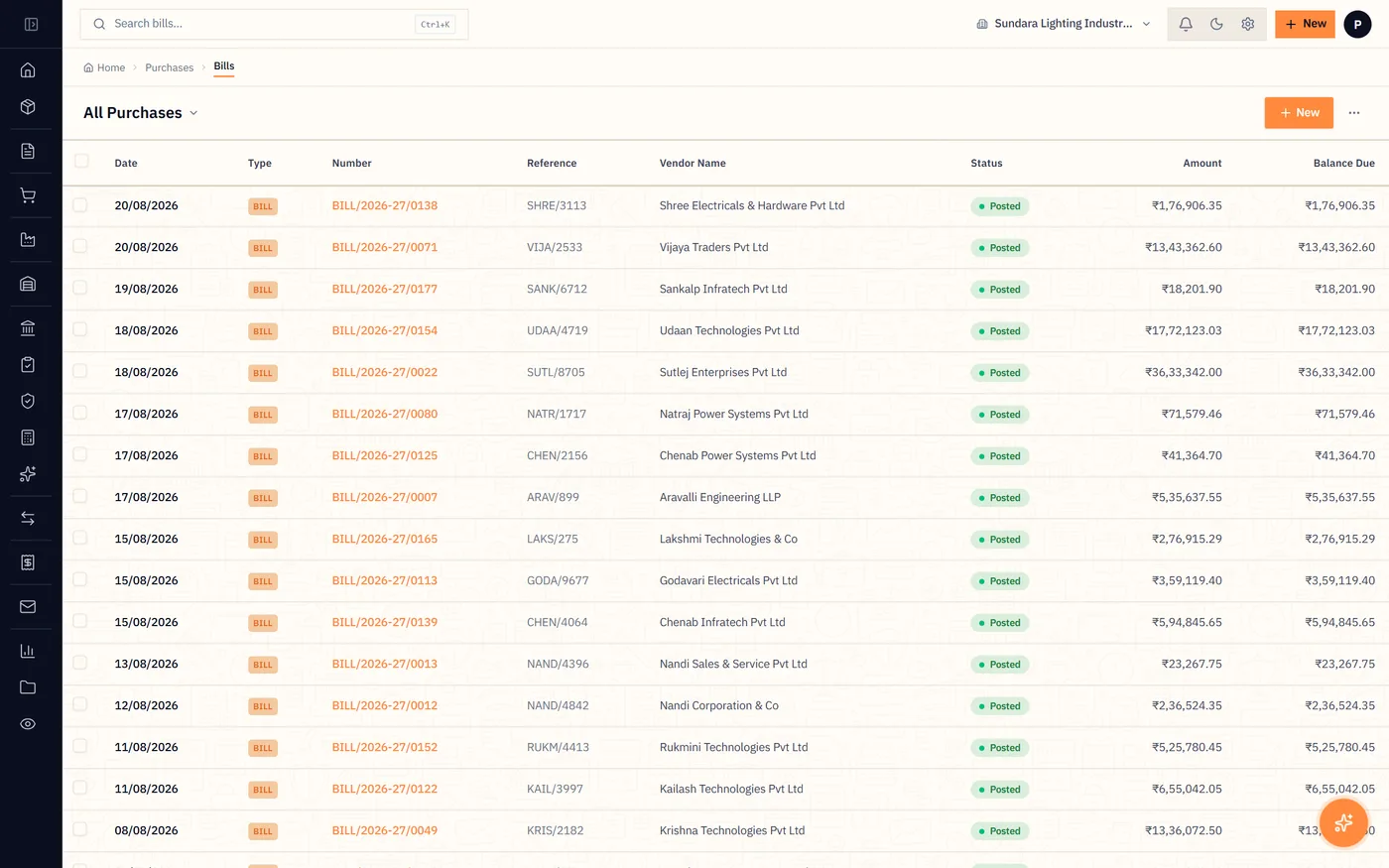
Bills with payables ageing

Bills with payables ageing — what is due, to whom, and when.

Purchases, On Screen

Record A Bill

Vendor, items, tax and the TDS section — settled in one screen.

Purchase Orders

Ordered, received, billed — the three-way view without a spreadsheet.

Receipt Notes

Goods in, recorded against the order and the godown.

Debit Notes

Returns and rate differences, against the original bill.

Payments Made

Settled against bills, part-payments tracked.

Payables Ageing

Who you owe, how long, at any date.

See It In Action ›

You Record It Once. Three Obligations Settle.

A purchase bill is simultaneously an expense, an input credit and a possible deduction. All three are decided here.

You EnterAutobooks PostsIt Feeds
Vendor & Items
Taxable Value
TDS Section
Expense Ledger
Input Tax Recorded
Deduction Computed
Payables Ageing
2B Reconciliation
TDS Challan
Automated — Autobooks does it Your call — nothing without you

One Bill, Three Obligations

The ExpenseThe CreditThe DeductionThe Payment
Settled At The BillExpense Head
Vendor Ledger
Cost Centre
Input Tax
Claimable Against 2B
HSN Recorded
Section Chosen
Rate Applied
Challan Tracked
Due Date
Part Payments
Ageing
Consequence If LateBooks are not currentITC at risk in 2BReconstructed at quarter-endNobody knows what is owed
Everything the purchase side owes downstream is decided at the moment the bill is recorded
THE PURCHASE-SIDE RULE

A Bill Recorded Late Breaks Three Things At Once.

Expense, input credit and TDS all originate at the same document. That is why a half-done purchase register makes 2B look wrong when it is not — and why the fix is bookkeeping, not compliance software.

Who Built This ›

Read Next

Fits The Stack You Already Have

Purchase OrdersReceipt NotesDebit NotesVendor LedgersVendor Portal2B Matching

Vendors can submit their own GSTIN, PAN and bank details through the portal.

Questions A CA Asks First

Do I need purchase orders to record a bill?
No — bills stand alone. If you do use orders, the ordered-received-billed view is there without maintaining a separate spreadsheet.
How does a bill affect my ITC?
The input tax is recorded at the bill and becomes claimable when it appears in your 2B. Reconciliation shows which bills have support and which do not.
When is TDS decided?
At the bill. The likely section is offered based on the vendor and the expense, confirmed by you, and then tracked through to the challan.
Can I record part payments?
Yes — payments settle against specific bills, and the ageing reflects what is actually outstanding rather than a net balance.
What about debit notes for returns?
Raised against the original bill so the linkage survives into your GST position rather than floating as a standalone credit.
Do vendors have to email me their details?
Not if you use the portal — they submit GSTIN, PAN and bank details themselves, which also means the data comes from the party who owns it.
See It On Your Books ›

Record One Bill. Follow It Three Ways.

Expense, credit and deduction, from one entry.

Book A Walkthrough ›