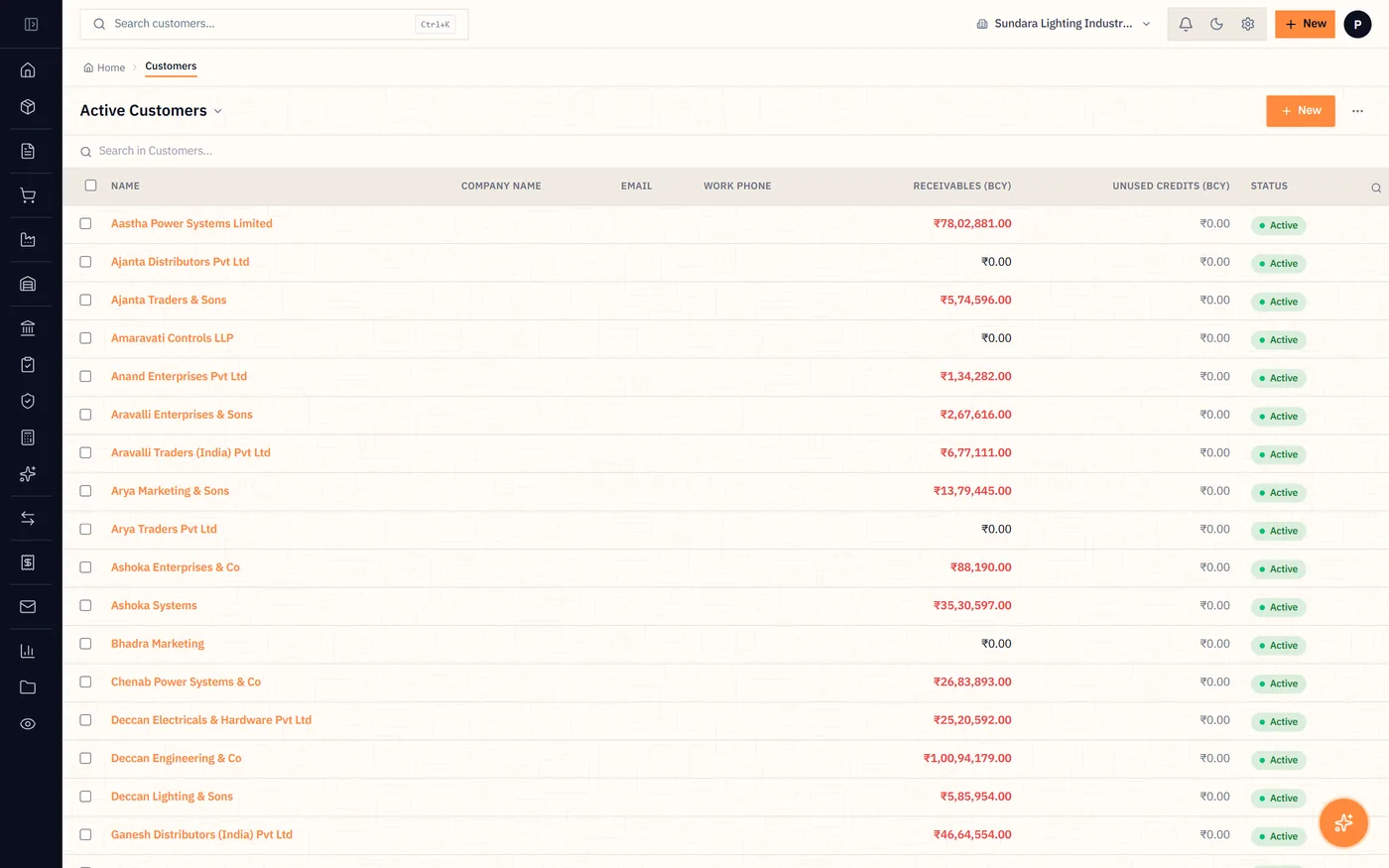
Every client's parties and books in one place — no per-client re-setup.
Who It’s For · CA Firms
Switch between businesses without switching systems. Each client’s books sit in their own database schema — juniors enter, you approve, and a locked period stays locked.
Every client's parties and books in one place — no per-client re-setup.
Six complaints we heard before we wrote a line of code — and what the software does about each.
“Every client is a different Tally file on a different machine. Half my day is opening and closing companies.”
One login holds every client. Switching is a dropdown, not a restart — and nothing about client A is reachable while you are in client B.
“My article does the entry and I find the mistake three weeks later, at closing.”
Entries you gate wait for sign-off before they post. The mistake surfaces in your queue on day one, not at year-end.
“I close a period, then someone back-dates an entry into it and my numbers move.”
Lock a period and it holds. Posting into a locked period is refused at the database, not discouraged by a warning.
“Bank entry is two days a month per client. Multiply that by forty clients.”
Bank Crusher reads the statement and drafts every line. On our reference run, 214 lines took eight minutes and 187 matched themselves.
“Clients ring my office for a statement or a TDS certificate. That is my staff’s morning gone.”
The client portal gives them their own statements, invoices, TDS certificates and query thread — without giving them your books.
“If I move my practice and it goes wrong, I have forty clients and nowhere to go.”
Tally sync brings masters, vouchers and closing balances across, and the reconciliation certificate proves ledger-by-ledger that they arrived intact. Export everything back on any day.
Bank statements crushed, purchase bills photographed, vouchers keyed. Everything lands in the approval queue.
Clear the queue client by client. Edit before post; nothing reaches a ledger without your name on it.
GSTR-1 and 3B come out of the books already kept. 2B mismatches surfaced while there is still time.
Trial balance ties or nothing posts. Lock the period; the audit trail answers the questions before they are asked.
Masters, vouchers and closing balances come across; all of it exports back on any day. The reconciliation certificate proves ledger by ledger that the books arrived intact — before you move the second client.
Keep it in Tally alongside if you like. Move the other thirty-nine when the certificate says the books arrived intact.